Why Are Nursery Pots Black, and When Is White Better?
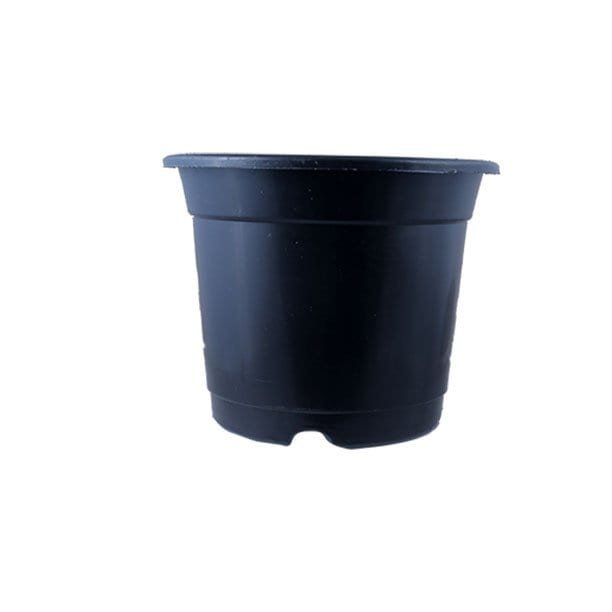
Most nursery pots are black because black is the cheapest and most practical colour for stock that is potted, moved and sold on quickly. White earns its higher price where pots stand in full sun through the summer, or where the pot is part of what the customer takes home. All three of our nursery ranges come in Black, Terracotta and Milky White, so you can choose by position and not only by habit.
Why are most nursery pots black?
- Cost. On our price list, black is the lowest-priced finish at every size in every nursery range. Small sizes are sold in packs of 150 and 250, so a few rupees a pot becomes real money across a season.
- It hides wear. Soil marks, water stains and scuffs from benches and crates barely show on black, so stock still looks tidy after weeks of handling.
- A uniform bench. One plain colour across thousands of pots lets the plants stand out and keeps a sales bench easy to read.
How much more do terracotta and milky white cost?
These are the MRPs per piece printed on our product pages, in rupees.
| Range and size | Black | Terracotta | Milky White |
|---|---|---|---|
| Nursery Pots 4.5 inch | 10 | 13 | 20 |
| Nursery Pots 8 inch | 33 | 42 | 67 |
| Nursery Pots 10 inch | 68 | 77 | 124 |
| Nursery Pots (Super) 6 inch | 18 | 23 | 37 |
| Nursery Pots (Super) 12 inch | 112 | 117 | 188 |
| Sumo 4 inch | 9 | 11 | 17 |
| Sumo 12 inch | 122 | 139 | 223 |
| Sumo 18 inch | 446 | 559 | 835 |
Terracotta costs a little more than black at each size. Milky white costs roughly 1.7 to 2 times black. That gap is why white is worth buying for a reason, not by default.
When is a white nursery pot the better choice?
- Open benches in full summer sun. A dark pot absorbs more sunlight than a pale one, and in a pot the wall is all that stands between that heat and the roots. Our article on what a pot's colour actually changes explains this in detail.
- Plants sold in their pot. At a garden centre or a nursery counter, a clean milky white pot is part of the display, and many buyers keep the plant in it for months.
- Large plants that stay put. A specimen in a 14 to 18 inch Sumo pot may stand in the same sunny spot for a long time, so the extra cost is spread over a long life.
White is rarely worth it for short-stay propagation, for stock grown under shade, or for plants that will be potted on within weeks. There, black does the same job for about half the price.
Where does terracotta fit?
Terracotta sits between the two. It costs only a little more than black, it has the warm look of a clay pot, and like the other colours it is moulded in 100% virgin plastic and listed as lightweight and unbreakable. It suits plants sold to home gardeners who want a pot that looks finished, at a price close to black. It also shows soil marks less than white does.
Which colour suits which job?
| Job | Colour | Why |
|---|---|---|
| Seedlings and rooted cuttings in 4 to 5.5 inch pots | Black | Bought in the largest packs, and the plants move on quickly |
| Growing on under shade | Black | Little sun reaches the pot wall |
| Open benches in full afternoon sun | Milky White | A pale wall picks up less heat |
| Plants sold to home gardeners | Terracotta or Milky White | The pot is part of the sale |
| Large specimens kept in sun for a long time | Milky White or Terracotta | The extra cost is spread over a long stay |
Many growers mix colours: black for propagation, a lighter colour for the final pot.
Which of our nursery pots come in all three colours?
Every size in all three ranges is offered in Black, Terracotta and Milky White. Our black nursery pots in the Nursery Pots range come in 4.5, 5.5, 8 and 10 inch. Nursery Pots (Super) come in 6 and 12 inch. The Sumo Nursery Pot covers eight sizes from 4 to 18 inch and is described as built for repeated use and outdoor conditions. For sizes by growth stage, see our guide to nursery pot sizes. Tell us the crops, where the pots will stand and the quantity, and we will suggest a colour and size for each stage.